
Turn Your Google Ads Budget into a Profit Powerhouse: The Ultimate ROI Blueprint
Investing in Google Ads is a powerful strategy to quickly drive qualified traffic and boost sales. However, without careful management, ad campaigns can quickly drain your budget without delivering the expected results. To get the most out of every dollar spent, a structured approach is essential.
Before diving in, it's critical to plan every step to ensure your budget is used as efficiently as possible.
In this guide, we’ll walk you through the steps to maximize the impact of your Google Ads campaigns. By following these tips, you can optimize your return on investment (ROI) and ensure your efforts lead to meaningful results.
Step 1: Define Clear, Measurable Goals

Before spending a single cent, the first step is to clearly outline what you want to achieve with your campaigns. Vague goals lead to disappointing outcomes. A clear analysis will provide you with a roadmap to guide your strategy. Here are the key points to consider:
- Driving Qualified Traffic : Are you aiming to attract the right visitors to specific pages on your website, such as blog posts or service pages?
- Lead Generation : Are you looking to collect leads for your sales team? This could include newsletter sign-ups, guide downloads, or quote requests through forms.
- Boosting Online Sales: If you run an e-commerce site, your primary goal will likely be to drive transactions directly through your ads.
- Building Brand Awareness : Sometimes, the goal is simply to increase visibility and reach a larger audience for your brand.
Once your goals are defined, it’s crucial to pair them with key performance indicators (KPIs) to measure success. For instance, closely track cost-per-click (CPC), conversion rates, and especially cost-per-acquisition (CPA) to understand how much each new lead or customer is costing you.
Setting clear goals will not only help guide your process but also allow you to measure the success of your campaigns once they’re launched.
Step 2: Choose the Right Campaign Types
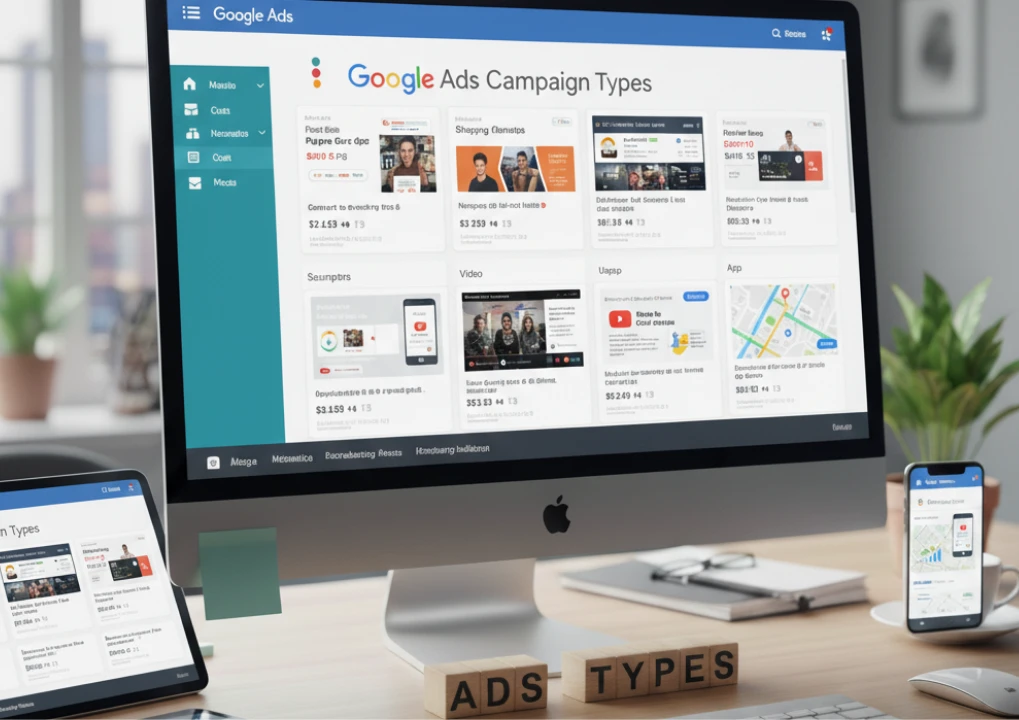
The next step is selecting the campaign formats that best align with the goals you just defined. Google Ads offers a variety of options, each with its own strengths.
Here are some common types of campaigns:
- Search Ads : These are the most well-known format. They’re ideal for capturing users actively searching for solutions, products, or services like yours. You target specific keywords to appear right when purchase intent is at its highest.
- Campaigns on the Display Network : These ads feature visual banners shown across Google’s vast network of partner websites, apps, and YouTube videos. They’re great for building brand awareness and reaching a wide audience, often before they actively start searching for your services.
- Performance Max campaigns : This newer automated format uses Google’s AI to deliver your ads across all networks (Search, Display, YouTube, Gmail, Discover). You provide creative assets (texts, images, videos), and Google optimizes delivery to drive conversions. It’s a great option for simplifying campaign management while aiming for high ROI.
Choosing the right campaign type is critical to reaching your target audience at the right time and in the right place.
Step 3: Master Targeting and Audiences

A deep analysis of your targeting strategy is essential to avoid wasting your budget. Proper targeting ensures your ads are shown to the people most likely to be interested in your offer.
Here are key elements to focus on:
- Geographic and Demographic Targeting : Make sure your ads are only shown in regions relevant to your business. You can also refine targeting based on age, gender, and other demographic factors to reach your core audience.
- Audience Segments : Don’t limit yourself to keywords. Build audiences based on interests, browsing habits, or purchase intent. Use remarketing to re-engage visitors who have already interacted with your website.
- Exclusion Lists : Exclude audiences that aren’t relevant to your goals. For example, if you sell products, exclude individuals searching for jobs in your industry. This helps focus your budget where it matters most.
- Lookalike Audiences : Once you’ve built a list of high-quality customers or leads, ask Google to find users with similar profiles. This is an effective technique for discovering new potential clients.
Refining your targeting ensures you focus your efforts on the most promising prospects, maximizing the likelihood of conversion.
Step 4: Continuously Optimize Your Campaigns

The final, and perhaps most important, step is ongoing monitoring and optimization of your campaigns. Google Ads isn’t a “set it and forget it” strategy. To maximize ROI, you need to analyze data and adjust your approach regularly.
Here’s how to stay on top of optimization:
- A/B Testing : Don’t settle for your first idea. Continuously test different versions of your ads—vary headlines, descriptions, calls-to-action, and visuals. Identify what resonates most with your audience and adjust accordingly.
- Keyword Optimization : Regularly review your search terms report to see exactly what users are searching for. Exclude irrelevant terms to stop unnecessary spending.
- Conversion Tracking : Make sure conversion tracking is properly set up. Without it, you’re flying blind. Track every valuable action (purchases, form submissions, calls) to understand which campaigns, ads, and keywords deliver real results.
- Budget Adjustments : Once you have reliable data, reallocate your budget. Increase spending on top-performing campaigns and scale back or pause those with poor ROI.
By following these four essential steps, you can approach your Google Ads budget with a strategic, results-driven mindset.
Putting Your Optimizations to Work
Defining clear goals, choosing the right campaigns, precise targeting, and continuous optimization are all critical steps to ensure your ad spend is aligned with your marketing objectives.
Remember, Google Ads is a powerful tool for generating fast, measurable results. By keeping your target audience and goals at the center of your decisions, you can create high-performing campaigns that attract and convert visitors.
Once your campaigns are optimized, make sure to continue monitoring and analyzing their performance. Be prepared to make adjustments as needed to improve your online presence and maximize your return on investment.
At Tonus Marketingwe help businesses manage and optimize their Google Ads campaignsto turn every advertising dollar into real results.